The expert briefing
Product facts, support observations, unanswered questions and commercial concerns appear together in the source.
Read the briefing ↗Product learning / From expert content to explanation
A specialist knows the product. A new adviser needs a way to explain it.
I shaped a fictional product specialist’s notes into a visual lesson that helps customer advisers explain how a planter works.
FIELDWELL / WICK ONE
The challenge
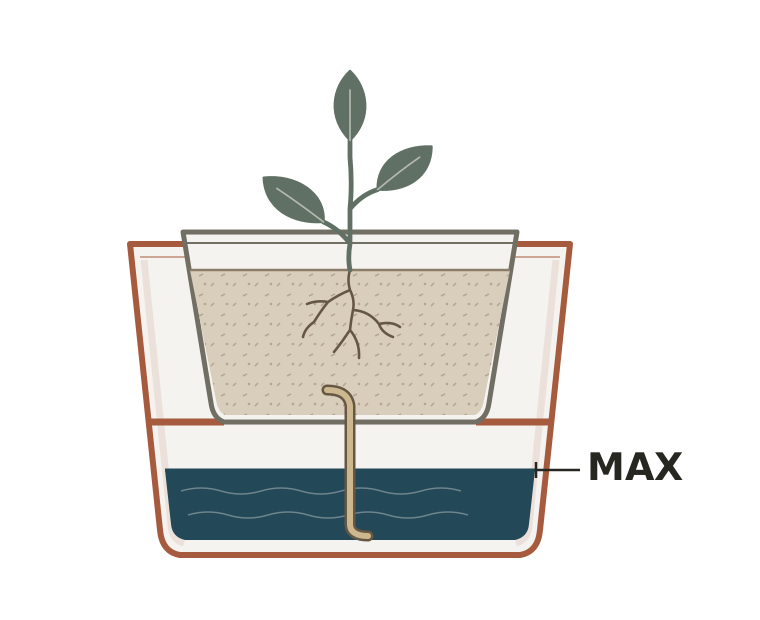
The specialist packet mixes product geometry, loose setup notes, support cases, production detail and a draft promise of two weeks of worry-free watering. Advisers need to explain the water path, demonstrate setup and answer care questions without repeating an unsupported claim.
I used task analysis to set three observable objectives: explain the water path, demonstrate first setup, and answer a care question within the product’s limits. The design record maps briefing sections to keep, simplify, defer or reject decisions; the lesson aligns a labeled cutaway, setup sequence, two practice situations and a self-reviewed customer explanation to those objectives. That meant retaining wick contact and the MAX limit, simplifying background science, deferring packaging detail and rejecting the fixed-duration promise.
Fieldwell, its product rules, briefing and review comments are authored fiction. No real SME interview, client approval or measured learner results are claimed.
Inspect the work
Product facts, support observations, unanswered questions and commercial concerns appear together in the source.
Read the briefing ↗Clarifications, exact source-to-learner edits, selection rationale and a simulated accuracy review.
Open the design record ↗Explore the mechanism, practise setup and explain the product to a customer.
Explore the lesson ↗A content decision
“A low reservoir with wet mix is not a reason alone to add water immediately.”
The adviser sees a low reservoir beside wet mix and must consider both against the plant’s care needs. Feedback explains why neither automatic topping-up nor a fixed weekly schedule is justified.
The teach-back asks learners to explain the path, physical contact and ongoing checks. They compare their own words with a model and self-check; the lesson does not score prose.
Primary background sources support only the general science, not the fictional product. For a real release, a product specialist would verify claims and diagrams against approved documentation, followed by adviser practice and review. Browser, zoom, keyboard-only, screen-reader and intended-user review remain pending.